
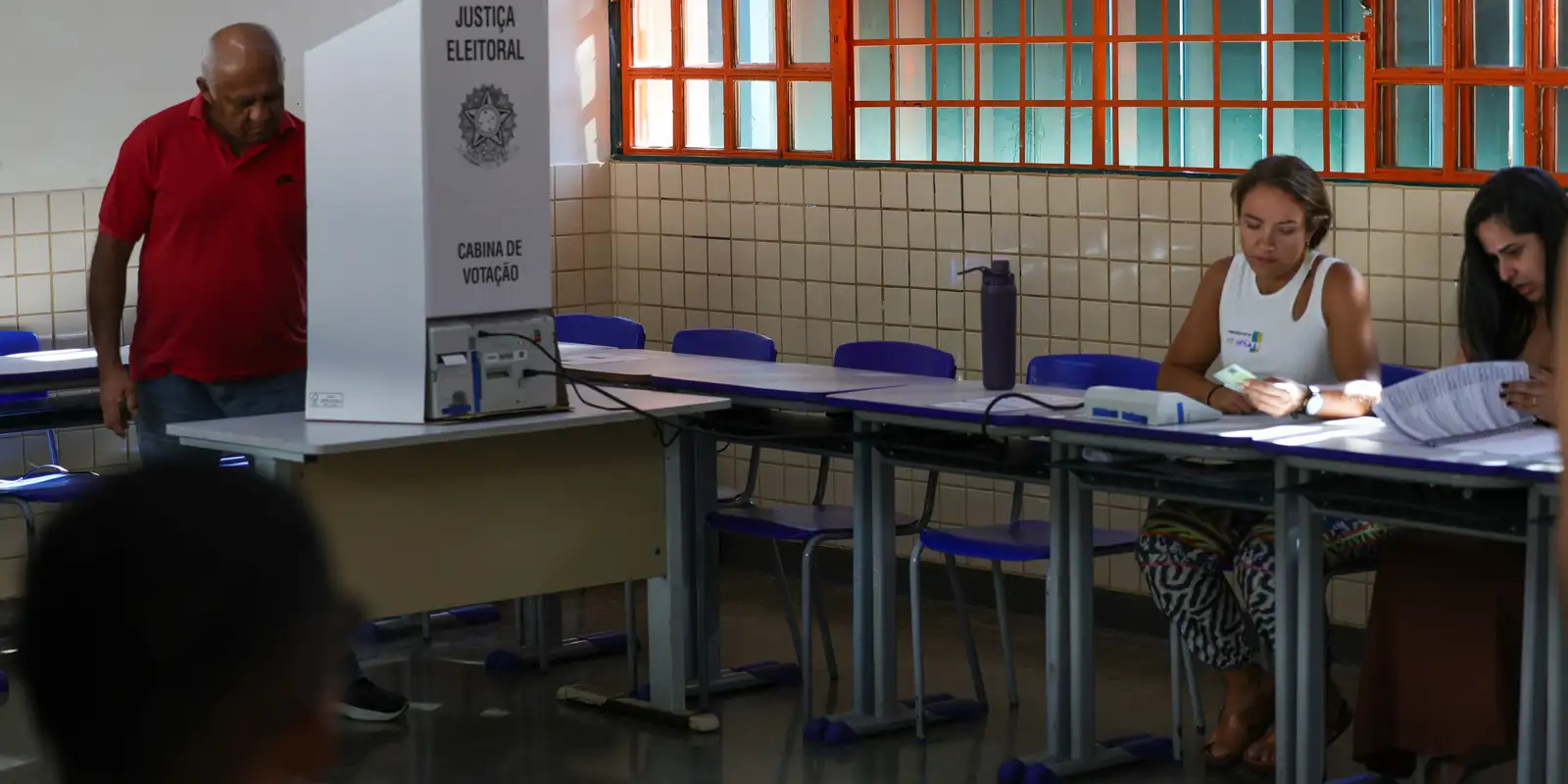
The Ministry of Human Rights and Citizenship (MDHC) recorded 189 reports of political violence during this year's electoral period. This total represents the sum of communications made to Disque 100, directly to the ministry, or through transfers from other ministries. All cases were formally forwarded to competent authorities, such as the Ministry of Justice and Public Security (MJSP), the Federal Police (PF), the Union Public Defender (DPU), the Public Prosecutor's Office (MP), the Labor Public Prosecutor's Office (MPT), and the Federal Public Prosecutor's Office for Citizen Rights (PFDC).
Volume of reports increases significantly during the electoral period
Between October 1st and 25th, Disque 100 received 90 reports of political violence. This number is more than four times higher than the 20 reports recorded throughout the entire month of September. The concentration of reports occurs on the two voting days: 19 reports were recorded on October 4th, during the first round, and 8 on October 25th, during the second round. The sum of these two days represents 30% of the total reports in the analyzed period, indicating a strong correlation between voting and the intensification of political violence acts.
Reports received through diverse channels
Aside from Disque 100, the MDHC received 38 reports through other channels or forwarded by partner ministries. These communications came from agencies such as the Ministry of Education (MEC), which forwarded reports to the Federal Police, and from organizations operating in specific areas of security and human rights. The diversity of channels shows that political violence is not merely a direct communication phenomenon, but also involves institutional interaction and surveillance networks.
Parliamentarians deliver reports in an official meeting
At a meeting last week, 41 reports were delivered directly to Minister of Human Rights and Citizenship Janine Mello by parliamentarians and political party representatives. This practice demonstrates the legislative institution's involvement in monitoring democratic security. The formal delivery of reports by members of the National Congress reinforces the importance of reporting mechanisms operating outside Disque 100, ensuring that acts of violence are recorded and addressed with urgency.
All allegations have been forwarded to competent authorities responsible for investigating and acting on cases of political violence. The Ministry of Justice and Public Security (MJSP) oversees the general coordination of investigations, while the Federal Police (PF) is responsible for investigating actions involving security agents and possible acts of intimidation or aggression. The Public Defender's Office of the Union (DPU) acts as a defender of the rights of victims, ensuring that allegations are treated with dignity and that affected individuals have access to legal support.
Historical context of political violence during elections
Allegations of political violence during elections are not new in Brazil. Since the 1980s, when the country underwent democratization processes, there have been records of acts of intimidation, physical assaults, and threats directed at candidates, political parties, and voters. The 2022 election, for example, already recorded allegations of violence, particularly in regions with strong political polarization. The increase in the volume of allegations this year may be linked to the intensification of campaign activities, party mobilization, and growing tensions between political blocs.
Implications for democratic security
The significant increase in allegations, especially on voting days, raises concerns about the safety of voters and the integrity of the electoral process. Political violence may undermine public trust in democracy, particularly in contexts of high polarization. Cases of threats and assaults can generate fear among voters, especially in regions with a history of political conflict, and may affect civic participation in elections.
Government responses and action perspectives
The government announced that it will strengthen investigations into political violence during the second round, with greater presence of security teams and monitoring of allegations. Although there are no data on concrete investigative actions or inquiry results, this decision demonstrates institutional commitment to protecting citizens' rights during the electoral process. Nevertheless, the absence of data on the number of cases investigated or closed limits the assessment of the real impact of these actions.
Limits and gaps in available data
The data presented do not include information about the type of violence (physical, verbal, digital), the geographic location of the cases, the identities of the accused or the victims, nor the progress of the investigative processes. The absence of these elements hinders the analysis of trends, the identification of patterns, and the development of preventive policies. Moreover, there is no information about the number of complaints that were deemed valid or that resulted in concrete actions.
Conclusion and future perspectives
The increase in reports of political violence during this year's electoral period is a warning sign regarding the health of the Brazilian democracy. The fact that 30% of the reports occurred on voting days indicates a possible link between political mobilization and individuals' exposure to physical and psychological risks. Although the government has strengthened monitoring, the lack of detailed data and follow-up on results prevents a full assessment of the effectiveness of these actions. To ensure democratic security, it is essential that the bodies responsible for investigating and preventing political violence access and publish more comprehensive and transparent data, enabling a more robust analysis and a more effective response to this phenomenon.