
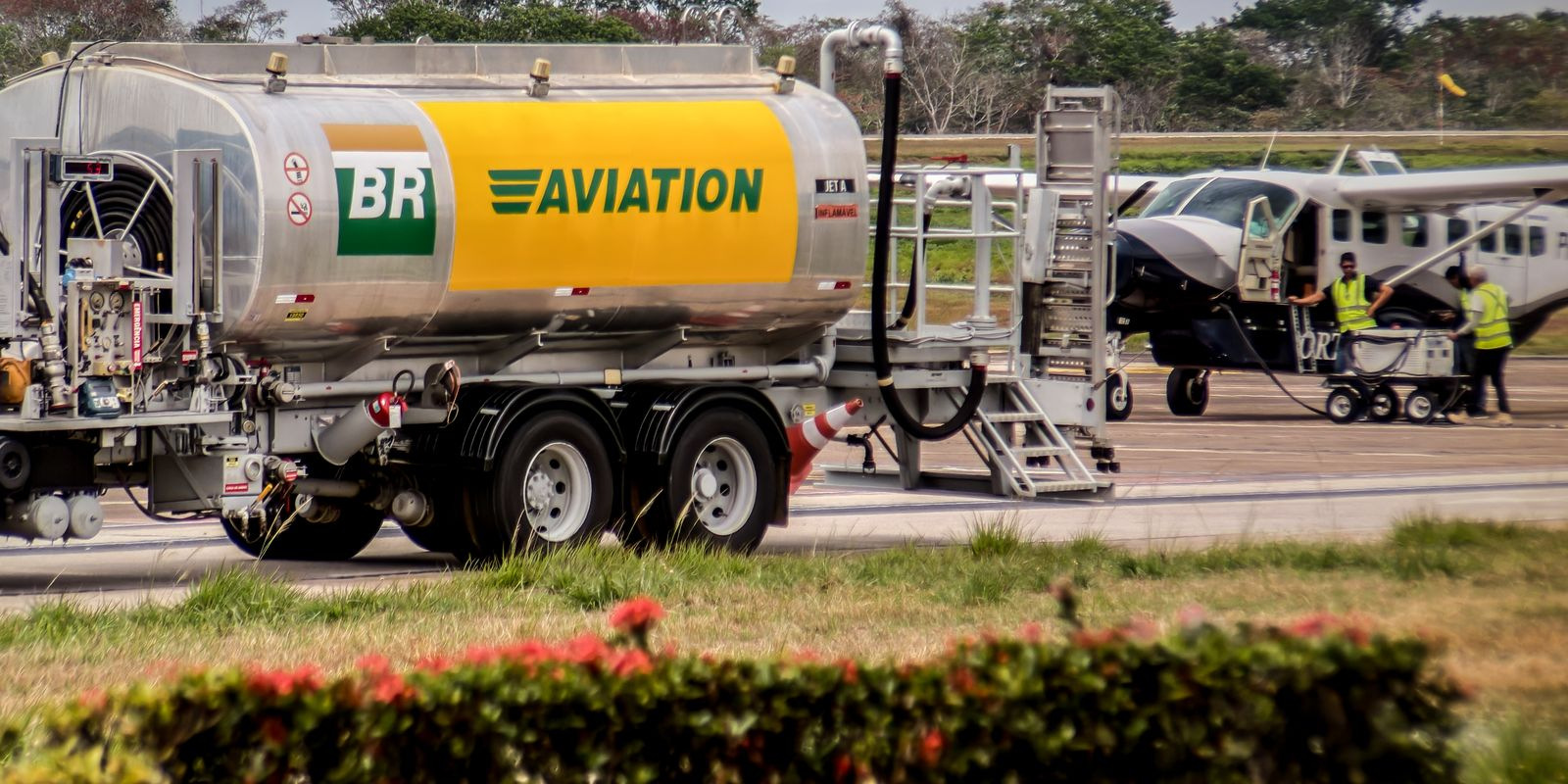
The Brazilian aviation fuel (QAV) market recorded, on Sunday (1st), a new average price increase of 7.2% for aviation kerosene, announced by Petrobras. The rise amounts to R$ 0.45 per liter compared to the previous month, raising the average price of fuel sold to distributors. This adjustment takes place within a broader context of international QAV price fluctuations, influenced by geopolitical and operational factors abroad.<\/p>
Context of the price adjustment
The adjustment follows a 11.76% variation in October, when aviation kerosene increased by 0.65 cents per liter. This movement reflects the fuel price's sensitivity to international benchmarks, which are influenced by large-scale events such as regional conflicts and oil production disruptions. According to Petrobras, the increase in QAV prices in Brazil is a result of rising international fuel benchmarks, occurring in a context of heightened geopolitical tensions in the Middle East and reduced refining capacity in Russia and Ukraine, due to the conflict between the two countries.<\/p>
Comparison with the international market
Despite the rise in international QAV prices, Petrobras notes that the cumulative price variations in Brazil are significantly smaller than those observed in the international market. Abroad, price adjustments have occurred daily since the beginning of the Middle East conflict, reflecting the volatility of prices in a high-uncertainty environment. In Brazil, price adjustments are made monthly, allowing for a gradual stabilization of prices for consumers and aviation sector operators.<\/p>
Contractual parametric formula
Petrobras states that price adjustments are conducted through a "parametric formula stipulated in the contract," aimed at offsetting short-term international market fluctuations. Although the specific parameters are not detailed, this formula is described as a risk management tool that reduces the QAV price's sensitivity to abrupt global market movements. The company emphasizes that, through this structure, price adjustments in Brazil are more moderate than those recorded abroad, where prices can experience significant variations within just a few days.<\/p>
Petrobras' role in the national market
A Petrobras possesses approximately 85% participation in the national production of aviation kerosene (QAV), making it the main supplier of the fuel in Brazil. However, the market is open to competition, allowing other companies to operate as producers or importers. This market structure enables the aviation sector to access diverse supply sources, although Petrobras remains the primary player in the production and distribution of QAV in the country.
Impact on airlines' operational costs
Despite a moderate price adjustment, the Brazilian Association of Airlines (ABEA) emphasizes that QAV accounts for a significant portion of airlines' operational costs. Fuel is one of the main components of flight operation costs, especially on long-haul routes with high fuel demand. Even a moderate increase in QAV prices can directly impact airlines' profit margins, particularly in a context of inflation and pressure on ticket prices.
Stability of the Brazilian market
The monthly adjustment model, combined with the contractual parametric formula, contributes to the stability of the Brazilian QAV market. Unlike international markets that face daily and volatile adjustments, Brazil adopts a more gradual system, enabling airlines to adapt more smoothly to international price movements. This approach is seen as a protective measure for the sector, avoiding abrupt shocks that could affect the operational viability of airlines.
Challenges and future perspectives
Despite the adjustment structure designed to dampen price fluctuations, the QAV market still faces challenges. Dependence on international pricing, even with dampening mechanisms, makes fuel prices sensitive to geopolitical events. The ongoing conflict in Ukraine and instability in the Middle East could trigger new waves of international price increases, potentially prompting Petrobras to reevaluate the parametric formula. Additionally, growing demand for sustainable fuels could drive changes in QAV production and distribution models in Brazil.
Another perspective is technological and environmental innovation in the sector. Petrobras has already announced initiatives for sustainable aviation fuel production, focusing on technologies that reduce carbon footprint. These innovations could not only improve fuel efficiency but also pave the way for a more sustainable aviation sector, with potential long-term cost reductions, even in the face of price fluctuations.
In summary, the 7.2% adjustment in the QAV, equivalent to R$ 0.45 per liter, is a direct reflection of international market conditions. Petrobras, through its contractual formula, seeks to balance price transparency with domestic market stability. Although price increases are moderate, the sector's sensitivity to global events remains, and airlines must continue closely monitoring international price movements and the sustainable production policies being developed by the state-owned enterprise.<\/p>