
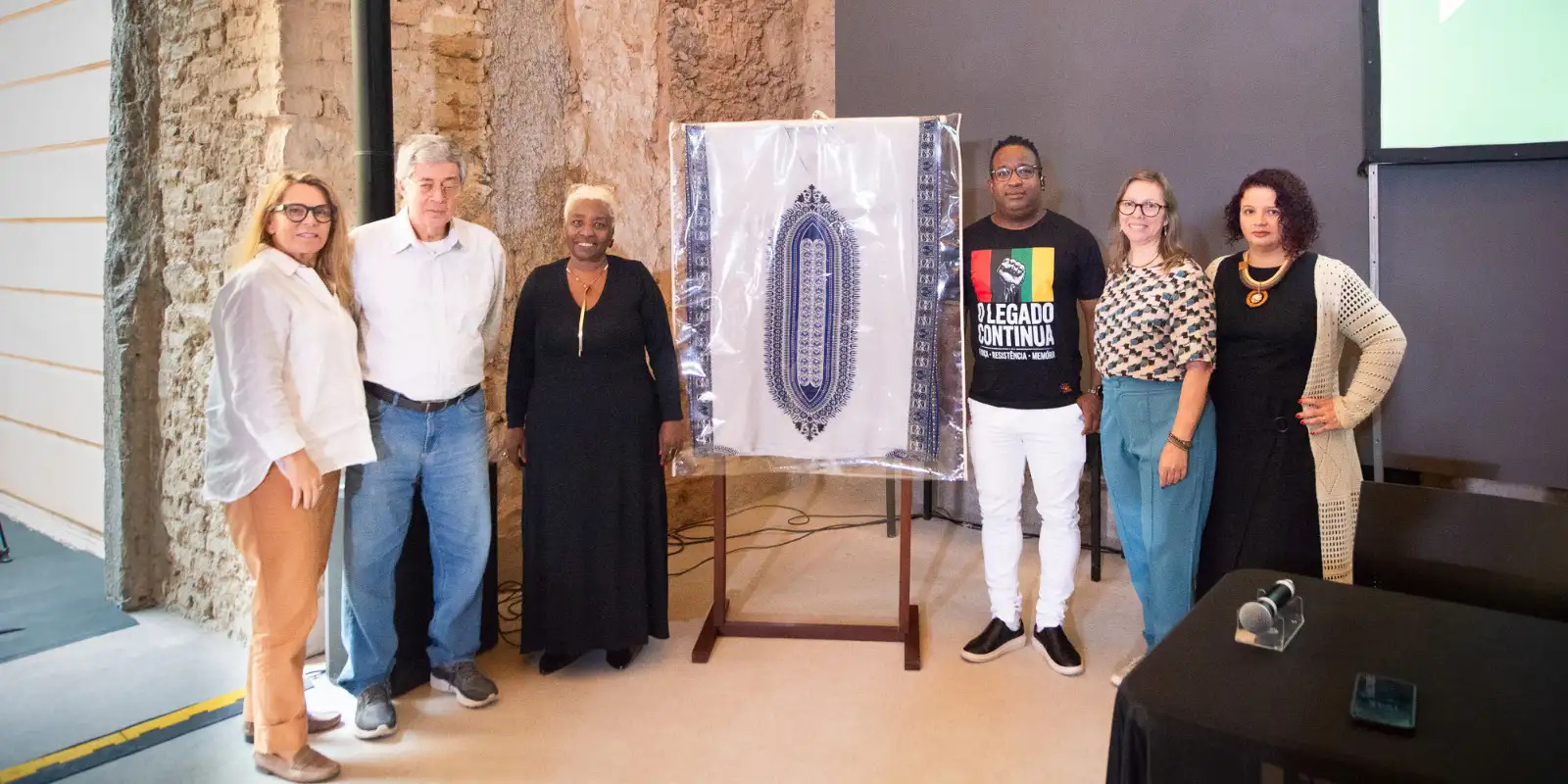
The National Museum, located in Rio de Janeiro's North Zone, has now acquired a new piece in its historical collection: personal clothing from Ialorixá Mother Bernadete. The donation, which took place during the third edition of the Dialogues of Reconstruction, occurred this week in São Cristóvão and was made by professor Jurandy Pacífico dos Santos, son of the leader of the Pitanga de Palmares quilombola community.
The Pitanga de Palmares community is located in the city of Simões Filho, in the Salvador Metropolitan Region, Bahia. Mother Bernadete, known as Ialorixá, was assassinated in 2023, leaving a deep mark on the memories of quilombola communities and on the debate about social justice and cultural preservation in Brazil.
Historical and Cultural Context
Brazil has a long history of community resistance, especially among quilombola people—groups formed by individuals who, during colonization, escaped exploitative and oppressive practices and organized themselves into autonomous communities. These communities developed traditional knowledge, languages, rituals, and forms of social organization that, although often not officially recorded, are fundamental to the construction of cultural identities.
Ialorixás, such as Mother Bernadete, occupy a central role in this context. They are spiritual and social leaders responsible for preserving and transmitting traditional knowledge, as well as acting as mediators between community members and the outside world. The figure of the ialorixá, therefore, is a symbol of resistance, ancestral knowledge, and female leadership within a historical context marked by oppression and exclusion.
The National Museum, an institution with over 150 years of history, has consistently committed itself to the cultural diversity of the country. The decision to include a personal item from Mother Bernadete in its collection represents a significant step in the valorization of quilombola knowledge, which until now has been marginalized in the official narratives of national history.
The Dress: A Symbol of Ancestry
The donated object is a white dress with blue details, which was worn by Mother Bernadete during community activities. For professor Jurandy Pacífico dos Santos, the choice of the dress goes beyond the material aspect. He stated that the piece represents more than just clothing: "The donation of the clothing is not merely the donation of an object. That is not an object. It is more than that. It is about ancestry. It is about a woman who dedicated 72 years of her life to preserving quilombola identity."
According to the professor, the donation is a way of reaffirming the value of quilombola communities as historical and cultural subjects. The presence of the dress in the National Museum, a space of memory and research, allows future generations to have direct access to a physical symbol of a leadership that fought for rights and identity.<\/p>
The Dialogues of Reconstruction: a space of dialogue and memory<\/h2>
The event that culminated in the donation took place during the 3rd edition of the Dialogues of Reconstruction, a gathering that brings together experts, community leaders, and cultural institutions to discuss topics related to memory, knowledge, and quilombola heritage. The central theme of this edition was the preservation and representation of these cultures within institutional spaces.<\/p>
The organizers of the event emphasized that the initiative to donate a piece by Mãe Bernadete "integrates the proposal of recognizing and preserving the memories, knowledge, and practices of quilombola communities as living heritage, expanding the possibilities of representing these stories within the institution".<\/p>
This type of dialogue is important because, historically, quilombola communities have been seen as 'examples' of resistance, but rarely as active agents in history. The presence of personal-use objects from quilombola leaders in the National Museum can help change this narrative, offering a more authentic and complex view of the lives of these communities.<\/p>
Implications for memory and justice<\/h2>
The death of Mãe Bernad-ete in 2023 triggered an intense search for memory and justice. In 2024, a jury convicted a fourth accused of 23 years in prison for involvement in the murder, showing that despite violence, there are advances in the pursuit of accountability and reparations.<\/p>
However, justice does not lie solely within the penal system. The donation of the dress to the National Museum is an act of memory that seeks to ensure that the stories of quilombola leaders are not forgotten. The presence of a physical object, even if simple, can serve as a starting point for broader debates about including minority voices in official historical narratives.<\/p>
This type of initiative also has implications for education. The possibility that the dress be used as a teaching material in schools and educational institutions can help sensitize young people about the importance of cultural diversity and historical resistance.<\/p>
Challenges and future perspectives<\/h2>
Despite the symbolic meaning of the donation, there are challenges regarding the preservation and use of this object. The National Museum, being a public space, faces the need to ensure that the exhibition and use of the dress are carried out with respect to the quilombola culture and the values of the community.<\/p>
It is fundamental that the museum work with the Pitanga de Palmares community, ensuring that the donation does not become merely a static exhibition, but an active space for dialogue. The community must have a voice in how the object is presented, interpreted, and used.<\/p>
Moreover, the preservation of quilombola knowledge requires more than simply storing objects. It is necessary to invest in research, documentation, and the training of professionals who understand the depth of traditional knowledge, avoiding the reduction of complex cultures to simplified symbols or images.<\/p>
Looking ahead, the donation of the dress could serve as a starting point for projects that integrate quilombola communities into the process of building collective memories. For example, the National Museum could develop rotating exhibitions, community workshops, or partnerships with schools to promote education in quilombola knowledge.<\/p>
This initiative, although modest, represents a significant advancement in Brazil's cultural policy. By including a personal item used by a quilombola leader, the National Museum is contributing to a paradigm shift: from a national history that centers rural and colonial figures to a narrative that recognizes the diversity, resistance, and leadership of Afro-Brazilian communities.<\/p>