
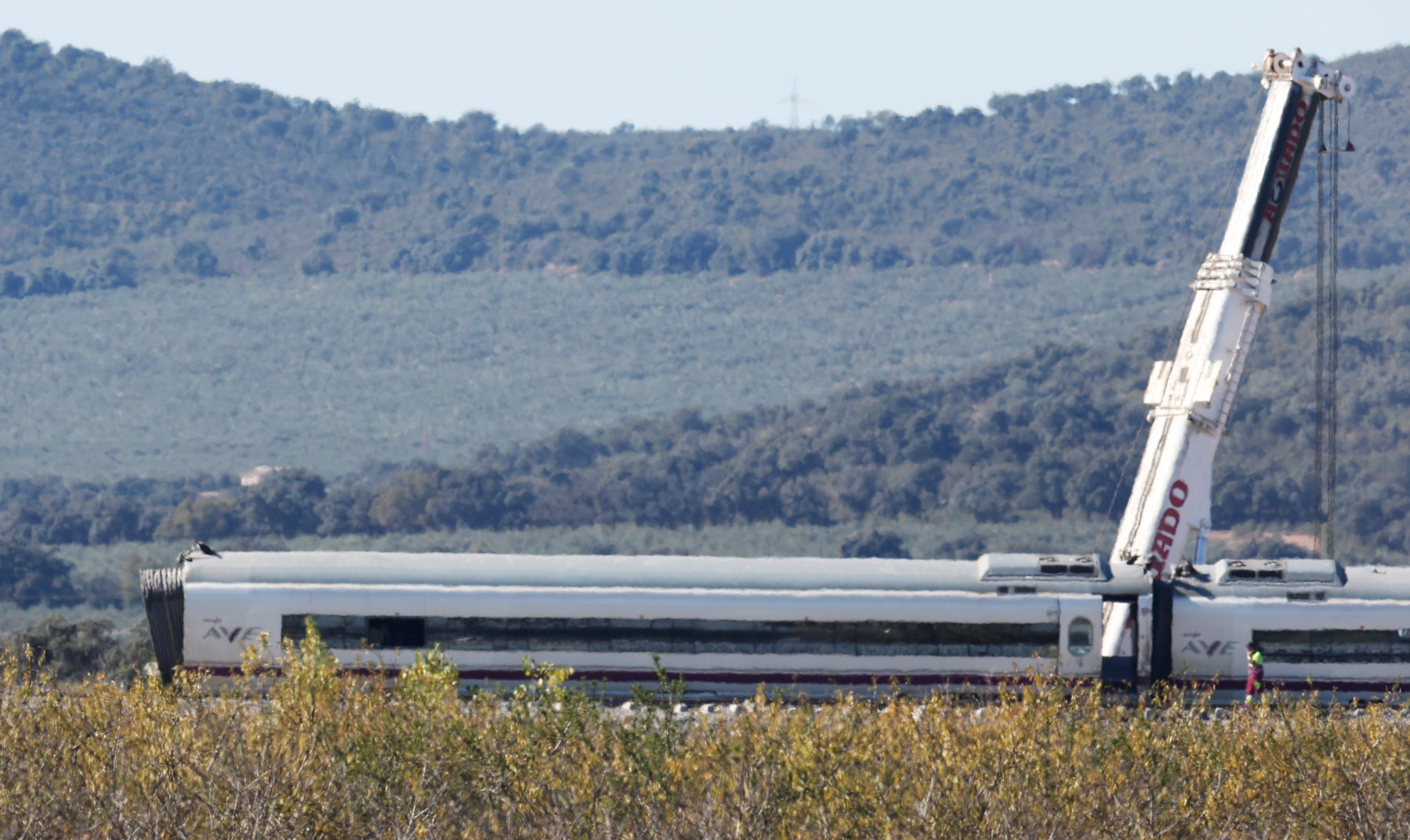
Lead
The Provincial Judge of Madrid has issued a judicial order this Saturday requiring the crane company contracted by ADIF and RENFE to accelerate search activities at the site of the rail failure, increase the number of available workers, and work continuously, including at night. The objective is to facilitate progress in damage assessment and search for possible victims, in a context of growing concern about the impact of the failure on rail traffic and user safety.
Contextualization of the rail incident
The incident occurred last Friday on the high-speed line between Madrid and Sevilla, where a structural failure in a rail track caused a temporary service interruption. The failure was detected during a routine inspection, although it has not yet been confirmed whether it was a technical fault, a maintenance incident, or a climatic anomaly. The company contracted by ADIF and RENFE, responsible for rail infrastructure management and maintenance, has been designated to lead the rescue and damage assessment operations.
The failure was located in a section of the track passing through degraded terrain, with steep slopes and exposure to adverse weather conditions. Although no accidents or fatalities have been reported, authorities have warned that the risk of landslides or structural collapse remains, especially under rainy conditions or low temperatures.
Detailed judicial order
The judicial order, issued this Saturday by the Provincial Judge of Madrid, is directly addressed to the crane company contracted by ADIF and REN-than. It requires the company to have all necessary personnel available to carry out search, assessment, and monitoring activities at the site. Additionally, it orders the extension of working hours, including night shifts, to ensure continuous coverage of the affected area.
The measure aims to accelerate the identification of possible structural damage and possible victims, as well as facilitate decisions regarding the reopening or maintaining the affected section. The judge has emphasized that time is a critical factor, as any delay could increase the risk of secondary incidents or greater damage.
Responsibilities of ADIF and RENFE
ADIF (Administración de Infraestructuras Ferroviarias) and RENFE (Red Ferroria Española) are the entities responsible for the management of the railway infrastructure and the transportation service, respectively. Both have assumed the responsibility of coordinating rescue operations and maintaining the safety of the railway system.
ADIF is responsible for the planning and execution of infrastructure works, while RENFE manages the transportation service and train operations. In this case, the coordination between these two institutions has been key to the rapid response, although delays have been recorded in communication between technical and operational teams.
The company contracted by both entities has been designated to carry out search, monitoring, and damage assessment activities. However, until now, a shortage of available personnel has been recorded, which has generated concern about the technical response team's capacity.
Implications for railway traffic
The incident has caused a partial suspension of services on the Madrid-Sevilla line, with a 40 percent reduction in high-speed trains. Users have reported significant delays and difficulties in planning their trips. Although no permanent diversions have been confirmed, authorities have announced that the possibility of reopening the section will be evaluated in the next 48 hours, depending on the progress of the investigations.
The suspension has generated increasing pressure on transportation companies, which have started offering alternative transportation options, such as buses and regional trains, to serve affected users. However, these alternatives do not fully meet the demand, especially in peripheral areas.
Reactions from authorities and experts
The judge has stated that the judicial request is a necessary measure to ensure safety and order in the railway system. She has warned that any delay in search operations could jeopardize the integrity of the track and the well-being of users.
Experts in railway infrastructure have highlighted that the type of failure detected is rare, but not uncommon in degraded areas. The technical analysis indicates that the damage could have been caused by a combination of factors, such as structural wear, exposure to weather, and inadequate maintenance in certain sections.
Some experts have expressed concern about the lack of a clear protocol for managing incidents of this type, especially in areas of high traffic density. They recommended establishing an independent technical commission to review maintenance procedures and emergency response protocols.
Projection of progress and next steps
Search operations will continue intensively for the next 72 hours, with the objective of identifying any structural damage or possible presence of people. The contracted company has confirmed that it has already increased the number of workers to 120, of which 60 will be assigned to search and monitoring tasks.
It is expected that night operations will begin tomorrow, in order to cover the hours of greatest weather exposure and highest risk of slope failure. The company has indicated that vibration detection equipment and temperature sensors will be used to assess the stability of the terrain.
Authorities have announced that a detailed report on the situation will be published within the next 48 hours, including an assessment of the damage, the condition of the equipment, and the next safety measures. This report will be presented to the Transport Commission of the Ministry of Infrastructure.
Conclusion and future perspectivesThe incident on the Madrid-Seville line represents a turning point in the management of railway infrastructure in Spain. Although no fatalities have been recorded, the incident has highlighted the vulnerabilities of the system in the face of weather conditions and structural degradation.
The judicial request by the judge, which demands a faster and more efficient response, reflects a growing need to improve maintenance protocols and emergency response procedures. Although progress in the operations is expected, the case could serve as a reference point for a comprehensive review of national railway safety policies.
In the future, it is expected that more robust preventive measures will be implemented, such as the use of real-time sensors, periodic review of degraded areas, and strengthened coordination between ADIF, RENFE, and the contracted companies. These actions could help prevent future incidents and ensure the continuity of railway services.