
The partial lunar eclipse in pictures: almost 96% of the disk was in shadow
Gallery of the partial lunar eclipse of August 27-28, 2026, one of the deepest in years: up to 96% of the Moon entered the umbra and turned copper-red over the Americas, Africa, and Europe.

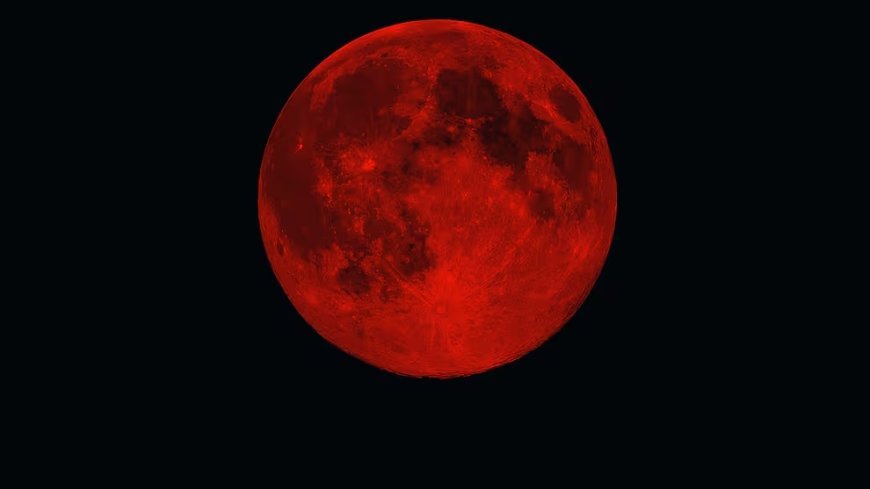
The partial lunar eclipse in pictures. The early morning of August 27-28, 2026, offered a partial lunar eclipse of magnitude 0.93: almost the entire disk was within the Earth's umbra. It was not a total eclipse, but visually it resembled a "blood moon," with a bright edge and the rest in copper and red tones.
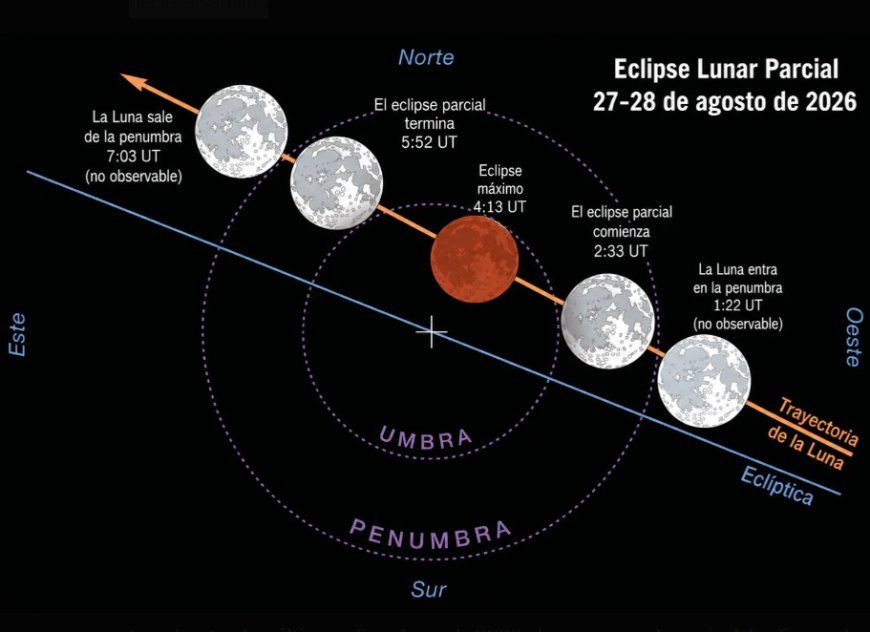
The maximum occurred at 04:13 UTC. The partial phase lasted about 3 hours and 18 minutes. The entire phenomenon, including the penumbra, lasted 5 hours and 38 minutes. It was visible in the Americas—where it coincided with nightfall—and in Europe and Africa, where the Moon was approaching sunset.
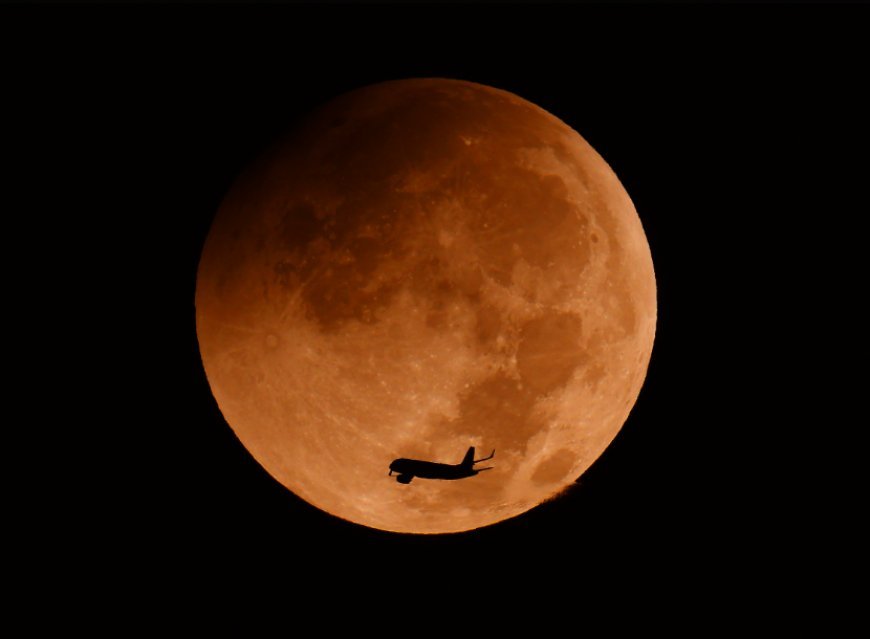
In Spain, the partial phase began around 4:34 a.m. Peninsular time. The maximum, around 6:12 a.m., coincided with a very low Moon. In central and eastern Spain, the Balearic Islands, and Melilla, the Moon set before the partial phase ended. In western Spain, the Canary Islands, and Ceuta, it could be observed for longer. No glasses are needed: the lunar eclipse is visible to the naked eye.
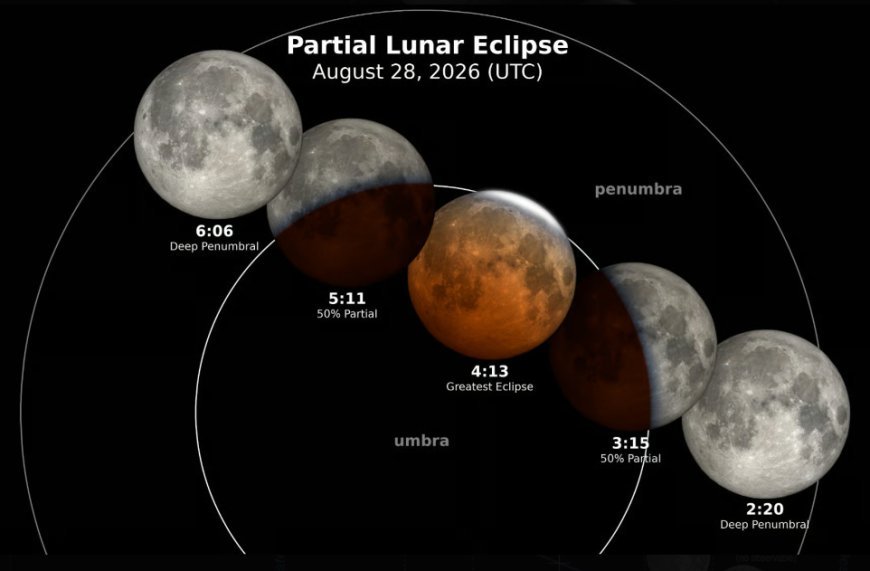
The Earth's shadow moves across the Moon from east to west. It first darkens one edge; at the maximum, only a light band remains. The reddish color is due to sunlight passing through the Earth's atmosphere and being refracted toward the Moon.
Photographers captured the eclipsed Moon over Warsaw, Athens, Dakar, and Brasilia, and composite images showcasing the complete sequence. In the Canary Islands, the phases were recorded with a fixed camera. In the United States, storms along the East Coast hampered observation in some areas.
It was the second and final lunar eclipse of 2026, two weeks after the total solar eclipse of August 12. The next total lunar eclipse will not occur until late 2028; until then, tonight remains the year's great lunar spectacle.
What's Your Reaction?
 Like
0
Like
0
 Dislike
0
Dislike
0
 Love
0
Love
0
 Funny
0
Funny
0
 Wow
0
Wow
0
 Sad
0
Sad
0
 Angry
0
Angry
0















Comments (0)