
Morocco Reclaims Ceuta and Melilla: “We Will Not Give Up an Inch of Our Territory”
Three Moroccan ministers have reiterated their claim to sovereignty over Ceuta and Melilla following the migration crisis. Nizar Baraka affirms that Rabat will not cede “an inch.” Spain responds that both cities are Spanish “until the end of time.”

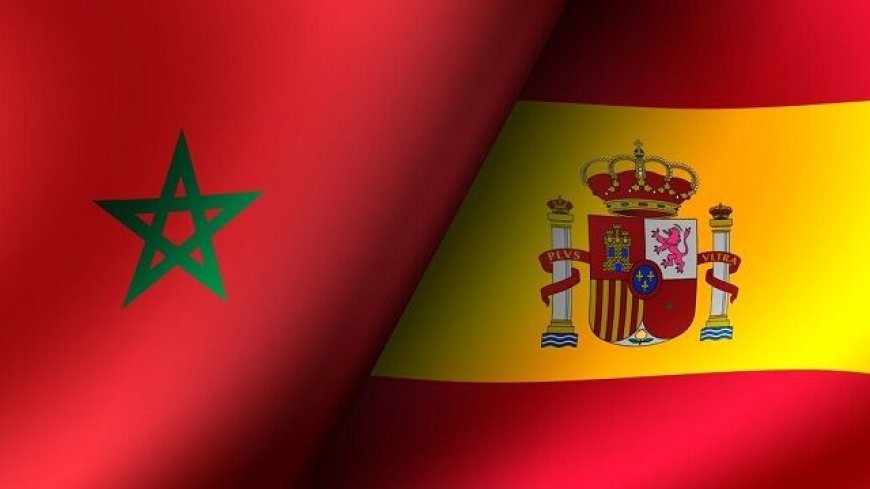
Morocco has once again brought its claim to Ceuta and Melilla to the forefront. The Minister of Public Works and Water and Secretary General of the Istiqlal party, Nizar Baraka, stated on Thursday that Spain is an “essential partner,” but that Rabat “will not back an inch of our national territory.” This statement comes after Pedro Sánchez defined Spanish territorial integrity and the sovereignty of the two autonomous cities as “red lines.”
This is not an isolated statement from the Moroccan Ministry of Foreign Affairs, but rather a verbal offensive by several members of the government. In August, Justice Minister Abdellatif Ouahbi claimed Morocco's "historical and geographical rights" and a "space for dialogue" for the "return to the homeland." The Minister of Religious Affairs, Ahmed Toufiq, alluded to the "liberation" of the "occupied cities" before King Mohammed VI. On August 21, Spain summoned Ambassador Karima Benyaich in response to these statements, which Prime Minister Sánchez deemed "unacceptable."
This claim is not new: Morocco has maintained it since its independence in 1956, along with the claim to the Peñón de Ifach and the Chafarinas Islands. It has never succeeded in having the UN recognize them as colonies. Spain counters that Ceuta and Melilla have been Spanish for centuries, part of its territory and of the European Union. Albares has reiterated that there "has not been, nor will there be" any negotiations on sovereignty. Sánchez assured Congress that they “will remain Spanish until the end of time” and invited King Felipe VI to visit them in the coming weeks. The last visit by a Spanish monarch to both enclaves was that of Juan Carlos I in 2007.
The context is the crisis that erupted on July 30 and 31, when more than 70,000 people crossed into Ceuta. Spanish police reports point to the involvement of Moroccan agents on the ground; Sánchez says he has not received “solid evidence” that Rabat orchestrated the influx. Analysts and the opposition interpret this as Rabat taking advantage of the border tension to bring back to the forefront a dispute that Madrid considers settled.
Marruecos ataca de nuevo. En una nueva declaración, esta vez protagonizada por Nizar Baraka, Ministro de Equipamiento y Agua en Marruecos, reitera que no renunciarán a un palmo de su “territorio nacional” en referencia a Ceuta y Melilla.
— Taleb Alisalem (@TalebSahara) September 3, 2026
Avise de esto hace 4 días.
Habrá más. https://t.co/QRBo2KiZv3 pic.twitter.com/9nFsQCWwok
What's Your Reaction?
 Like
1
Like
1
 Dislike
0
Dislike
0
 Love
0
Love
0
 Funny
0
Funny
0
 Wow
0
Wow
0
 Sad
0
Sad
0
 Angry
0
Angry
0












Comments (0)