
The Foreign Ministers of Spain and Iran met months ago: the diplomatic "league" Spain is playing in under Sánchez
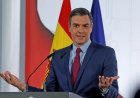
A viral social media post highlights a meeting between José Manuel Albares and his Iranian counterpart in New York a few months ago, criticizing Pedro Sánchez's foreign policy for aligning Spain with the Islamic regime of Iran amidst the current war.

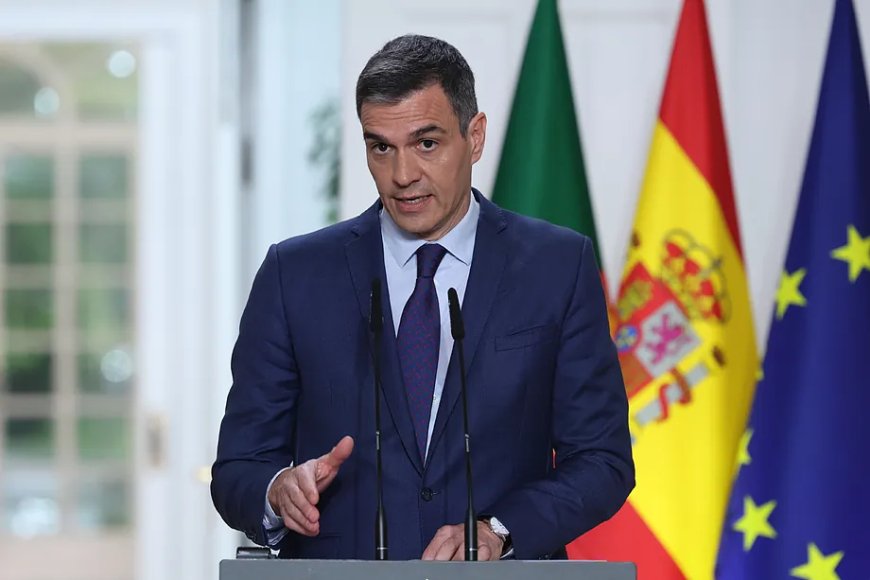
Criticism on social media: The meeting between Albares and the Iranian minister in New York highlights the "league" in which Spain plays thanks to Sánchez.
A viral post on social media, shared by the organization Action and Communication on the Middle East (ACOM), has reignited the debate about the foreign policy of Pedro Sánchez's government by recalling a meeting held just a few months ago between the Spanish Foreign Minister, José Manuel Albares, and his counterpart from the Islamic regime of Iran, on the sidelines of the United Nations General Assembly in New York. The video shows images of both diplomats in a bilateral meeting, accompanied by the message: “The foreign ministers of Spain and the Islamic regime of Iran, meeting just a few months ago. This is the league Spain plays in thanks to @sanchezcastejon.
”. The post, which has garnered thousands of interactions, harshly criticizes the Spanish government's stance in the current conflict, where Spain has rejected the use of the Rota and Morón air bases to support US and Israeli operations against Iran and has condemned both the initial attacks and Iranian reprisals. The opposition and pro-Israel groups interpret these diplomatic contacts as a sign of misalignment at a time of high geopolitical tension. They point out that, despite Spain's condemnation of human rights violations by the Iranian regime and the recent call by the Iranian ambassador in Madrid (Reza Zabib) to reject the attacks against Gulf countries and Cyprus, the government maintains open channels with Tehran in the name of dialogue and de-escalation.
The Ministry of Foreign Affairs maintains that these meetings are part of standard multilateral diplomacy in forums such as the UN, where Spain promotes respect for international law, non-proliferation, and the peaceful resolution of conflicts. Albares has repeatedly stated that “violence never brings peace or democracy” and that Spain prioritizes the protection of its citizens (more than 30,000 in the region) and global stability, without aligning itself with either side in the current escalation. However, the timing of the publication coincides with strong international criticism of Spain: Israeli Foreign Minister Gideon Saar has publicly questioned whether this position places the country “on the right side of history,” while the explicit support of the Iranian Embassy in Madrid for Spain’s refusal to accept the bases has fueled accusations of ambiguity or closeness to the ayatollahs’ regime.
President Pedro Sánchez recently appeared to summarize the government’s position in four words: “No to war,” advocating a diplomatic approach that, according to his critics, alienates Spain from its traditional allies in NATO and the EU in a context of Iranian nuclear and missile threats. Meanwhile, the European Union is holding extraordinary meetings to coordinate responses, and Spain insists that the priority is de-escalation and dialogue, even with controversial actors. The episode illustrates the polarization generated by the PSOE-Sumar government's foreign policy: for some, an exercise in independence and multilateralism; for others, a dangerous naiveté that places Spain in the "wrong league" in the midst of a global crisis.
Los ministros de exteriores de España y el régimen islámico de Irán, reunidos hace escasos meses.
— Acción y Comunicación sobre Oriente Medio - ACOM (@ACOM_es) March 4, 2026
Esta es la liga en la que juega España gracias a @sanchezcastejon pic.twitter.com/EQHZXgk6m7
What's Your Reaction?
 Like
0
Like
0
 Dislike
0
Dislike
0
 Love
0
Love
0
 Funny
0
Funny
0
 Wow
0
Wow
0
 Sad
0
Sad
0
 Angry
0
Angry
0










Comments (0)