
US Treasury Secretary accuses Sánchez government of putting American lives at risk and defends possible trade embargoes against Spain
US Treasury Secretary Scott Bessent harshly criticized the government of Pedro Sánchez, calling it "opportunistic" within NATO and stating that the refusal to use the Rota and Morón bases put American lives at risk during operations against Iran. Bessent did not rule out trade embargoes as a response.

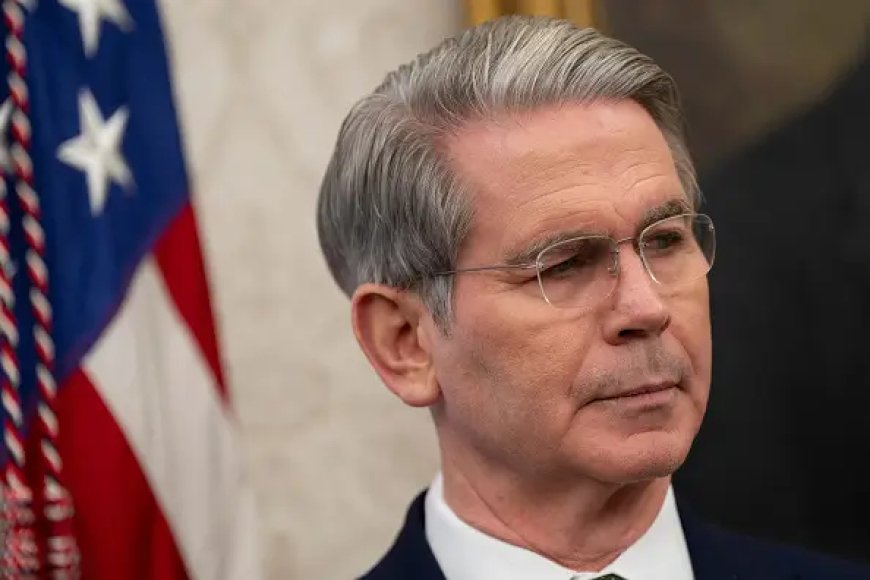
- Washington accuses Madrid of lack of cooperation at a critical moment and threatens economic retaliation In an unprecedented verbal escalation in recent bilateral relations, US Treasury Secretary Scott Bessent directly accused the Spanish government, led by President Pedro Sánchez, of adopting a stance that “endangered American lives” during military operations against Iran. In an interview with CNBC on Wednesday, Bessent described Spain's attitude as “unacceptable” and “uncooperative,” specifically referring to its refusal to authorize the use of the joint military bases of Rota and Morón to support “Operation Epic Fury” — the name given to the US-Israeli air strikes against Iranian targets last weekend.
- “Anything that delays our ability to conduct this "Waging war in the fastest and most effective way puts American lives at risk. The Spanish have put American lives at risk," Bessent stated, repeating the accusation emphatically. The Treasury Secretary went further and classified the Spanish government as a "free rider" within the context of NATO. According to him, Spain is the only member of the Alliance that does not adequately fulfill its defense spending commitments—a target that, under the Trump administration, was raised to 5% of GDP—benefiting from collective protection without contributing proportionally. "The Spanish government is intentionally taking advantage of the American government and all other NATO allies who have stepped forward. NATO has never been as strong as it is now thanks to President Trump, and the Spanish do not want to pay their fair share," Bessent declared.
- The criticism comes amidst a threat made by President Donald Trump the previous day, during a meeting with German Chancellor Friedrich Merz, to "cut off all trade with Spain" and impose embargoes. Trump directly ordered Bessent to prepare measures to "stop all business related to Spain," claiming he had the legal authority to do so, backed by recent Supreme Court decisions. When questioned about the feasibility of an embargo, Bessent responded that it would be "a combined effort" involving the Treasury Department, the U.S.
- Trade Representative, and the Department of Commerce, without ruling out its implementation. On the Spanish side, President Pedro Sánchez reaffirmed on Wednesday his "no to war" stance, condemning the military actions in Iran as "unjustifiable" and "dangerous," and defended that Spain will not be "complicit" in interventions that violate international law, even in the face of commercial threats. Sánchez emphasized that the decision regarding the Spanish sovereign bases prioritizes global peace and stability. The exchange of accusations occurs at a time of high geopolitical tension, with the United States pressuring European allies to drastically increase defense investments and align themselves more firmly with actions against Iran.
- Analysts point out that the episode could test the limits of transatlantic unity and generate significant economic impacts on bilateral trade, which involves billions of euros annually in Spanish exports of goods such as olive oil, wine, automobiles, and industrial components. To date, neither the State Department nor the White House has issued additional official statements on imminent sanctions, but the tone adopted by Bessent indicates that the Trump administration considers Spain an exemplary case in the fight against NATO's so-called "free riders."
- The situation remains under monitoring by the European Union, which may interpret any unilateral embargoes as a worrying precedent for the bloc.
What's Your Reaction?
 Like
0
Like
0
 Dislike
0
Dislike
0
 Love
0
Love
0
 Funny
0
Funny
0
 Wow
0
Wow
0
 Sad
0
Sad
0
 Angry
0
Angry
0












Comments (0)