
Spain denies using the bases, but American planes take off from Cádiz on the same night: Sánchez accused of "political theater" for voters.
Despite the official denial by Pedro Sánchez's government of the use of the Rota and Morón bases, several US Air Force planes took off from the Cádiz naval base on the night of the operations against Iran, reigniting accusations that the Spanish position was merely an internal political charade.

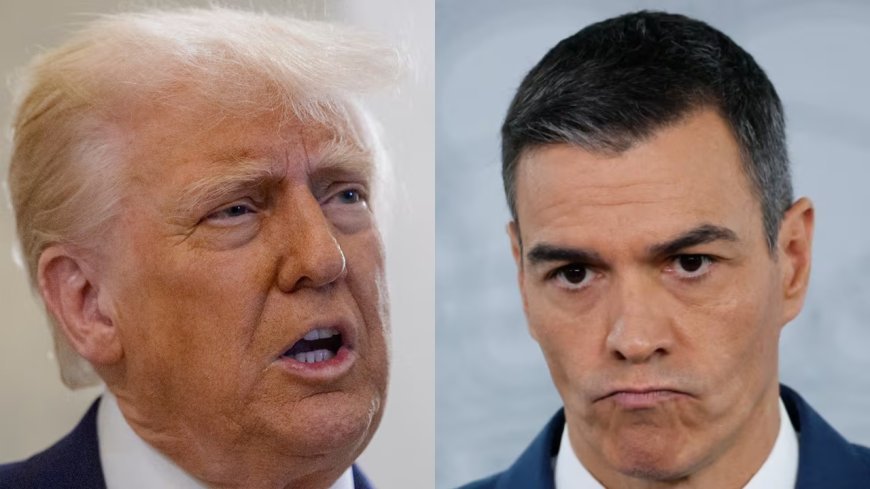
Contradiction in Cádiz: American planes take off from Spanish base on the same night as Sánchez's.
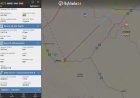
- While the Spanish Prime Minister, Pedro Sánchez, publicly reaffirmed that Spain would not authorize the use of its military facilities to support American operations against Iran, air tracking data revealed intense activity at the naval base in Cádiz: on the same night the attacks were launched, multiple US Air Force planes took off from Spanish territory.
- The Spanish refusal, emphatically communicated by Foreign Minister José Manuel Albares and Defense Minister Margarita Robles, had been presented as a matter of principle: the joint-use bases in Rota (Cádiz) and Morón (Seville) would not be released for offensive missions outside the framework of NATO or without the explicit approval of the Spanish government, prioritizing non-participation in actions that They violated international law. However, what was seen in the early hours of Sunday to Monday was different. Independent flight records show that at least seven American military aircraft – including KC-135 tankers and C-17 transport planes – took off from the Rota/Cádiz base at times coinciding with the start of operations in the Middle East. The initial routes indicate directions consistent with logistical support for bombers and fighters that participated in the attacks, contradicting the official narrative of "non-facilitation".
- The Spanish opposition and sectors of the European right were quick to classify the episode as "pure political theater". Leaders of the People's Party and Vox stated that Sánchez was feigning firmness to please his left-wing electoral base and pacifist voters, while in practice allowing – or at least not preventing – the continuation of American operations from Spanish soil. “The president says one thing to the cameras and allows another behind the scenes.
- This is not sovereignty, it is calculated hypocrisy to win votes,” declared the PP spokesperson in Congress, Cuca Gamarra, at a press conference held this morning. On the other side of the Atlantic, Treasury Secretary Scott Bessent seized upon this new development to reinforce his criticisms. In a statement to the press, Bessent stated that “Spain continues to play both sides: it publicly denies it, but leaves the doors open enough for our aircraft to leave.
- This only confirms that we are dealing with an unreliable ally that jeopardizes the safety of American troops by creating unnecessary logistical uncertainties.” The White House, in turn, intensified the pressure: President Donald Trump reiterated last night that he is considering “tough trade measures” against Madrid, including selective tariffs and restrictions on Spanish exports, should the ambiguous stance persist. The Sánchez government, in an official statement issued a few hours ago, denied any contradiction and classified the takeoffs as “routine movements of aircraft already stationed at the base, without any operational link to the actions in Iran.”
- The statement adds that “Spanish sovereignty over the facilities remains intact” and that “no exceptional authorization was granted.” Independent analysts, however, question the explanation: the volume and timing of the takeoffs, coinciding with the critical window of operations, suggest that, in the absence of an active and explicit prohibition, the United States would have exploited existing operational loopholes in bilateral agreements. The episode fuels transatlantic tension and divides opinions in Europe: for some, it is proof that Spain cannot afford to openly confront Washington; for others, it reinforces the need for greater strategic autonomy for the European Union.
- Meanwhile, bilateral trade – valued at more than 30 billion euros annually – remains under imminent threat of retaliation.
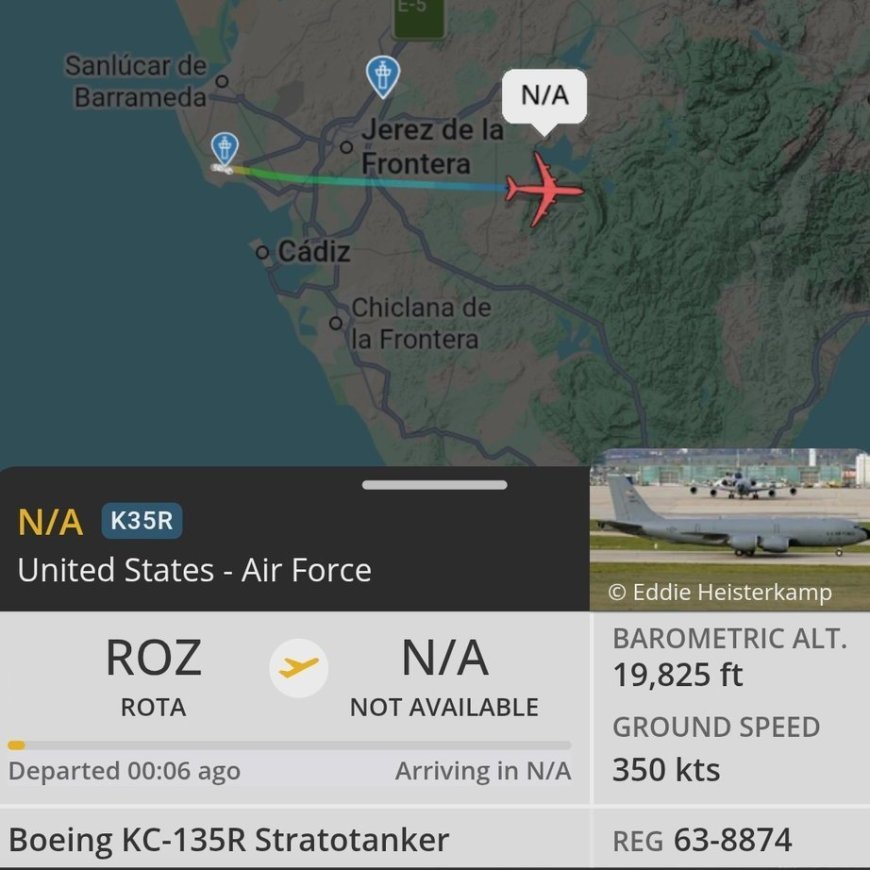
flightradar24.com
What's Your Reaction?
 Like
0
Like
0
 Dislike
0
Dislike
0
 Love
0
Love
0
 Funny
0
Funny
0
 Wow
0
Wow
0
 Sad
0
Sad
0
 Angry
0
Angry
0











Comments (0)